Contents
- Introduction
- What Is Gexbot?
- How the Gexbot Automation Platform Works
- Gexbot Risk Management Tools
- Automated Trading Software Risks
- Gexbot and Proprietary Firm Evaluation Models
- Trading Bot Performance Monitoring
- Practical Considerations Before Using Gexbot
- Psychological Impact of Automation
- Institutional Perspective on Algorithmic Trading
- Conclusion
Introduction
Automation has become an increasingly visible part of modern trading. From institutional algorithmic execution systems to retail trading bots, software-driven decision-making now plays a role across multiple asset classes. As more traders explore proprietary trading firms and evaluation-based funding models, questions naturally arise about how automation tools fit into structured trading environments.
Gexbot is one such automation solution that has attracted attention among traders researching algorithmic tools. However, before integrating any trading bot—especially in the context of prop firm evaluation models—it is essential to understand how the system works, what its operational structure looks like, and what risks must be considered.
This educational guide provides a structured overview of:
- What Gexbot is and how it functions
- The mechanics of a Gexbot trading bot
- The architecture of an automation platform
- Risk management considerations
- Compatibility concerns with proprietary firm rules
- Broader automated trading software risks
The objective is not promotion or endorsement. Instead, this article aims to help traders understand automation from a professional, institutional perspective—particularly those operating under strict drawdown rules, payout conditions, and evaluation requirements.
What Is Gexbot?
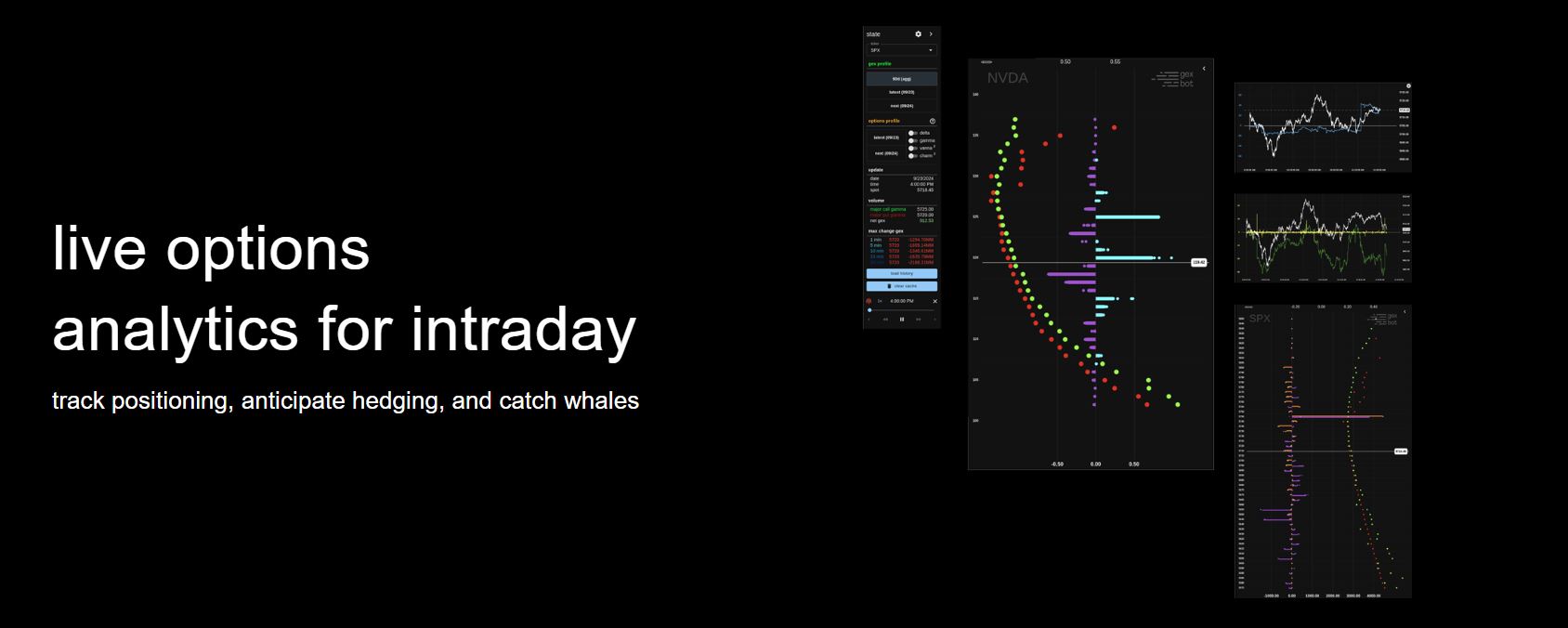
At a structural level, Gexbot appears to operate as an algorithmic trading system designed to automate trade execution according to predefined logic.
Automation platforms typically allow traders to:
- Connect brokerage or exchange accounts
- Deploy pre-configured strategies
- Monitor automated trade execution
- Track performance metrics
- Adjust risk parameters
Unlike discretionary trading, where entries and exits are manually executed, a Gexbot trading bot likely follows coded logic that reacts to market inputs automatically.
It is important to separate three components:
- Strategy logic – The rules that determine when trades are opened or closed.
- Execution engine – The system that sends orders to the broker or exchange.
- Risk control layer – Safeguards that limit exposure and manage drawdown.
Understanding these layers helps traders evaluate automation realistically rather than emotionally.
Get Started NowHow the Gexbot Automation Platform Works
1. Account Connection and Setup
A typical Gexbot account setup process may involve:
- Creating a user account
- Connecting a trading account via API or broker credentials
- Granting execution permissions
- Configuring position sizing rules
From a security perspective, traders should verify:
- Whether API keys are read-only or allow trade execution
- Whether withdrawal permissions are required
- How data encryption is handled
In proprietary firm environments, account connection rules may be restricted. Some prop firms prohibit third-party automation tools entirely, while others allow them under specific conditions.
2. Strategy Deployment
Automation platforms generally operate in one of two ways:
- Pre-built strategies provided by the platform
- Custom-configured strategies defined by the user
The underlying algorithm may use:
- Technical indicators
- Volatility filters
- Time-based triggers
- Order flow logic
However, regardless of logic sophistication, automation does not remove exposure to market risk.
A trading bot executes instructions—it does not adapt emotionally or evaluate macroeconomic context beyond programmed rules.
3. Execution and Order Management
The execution layer of an algorithmic trading system is critical.
Key operational components include:
- Order placement speed
- Slippage handling
- Stop-loss enforcement
- Take-profit automation
- Order modification protocols
In prop firm evaluations, execution accuracy directly affects:
- Daily drawdown limits
- Maximum overall drawdown
- Profit target progression
- Consistency metrics
Even minor execution discrepancies can lead to rule violations under strict evaluation models.
Start NowGexbot Risk Management Tools
Risk management is the defining factor separating structured automation from uncontrolled algorithmic exposure.
When evaluating Gexbot risk management tools, traders should look for:
- Maximum position sizing limits
- Daily loss caps
- Equity-based shutdown triggers
- Stop-loss enforcement logic
- Volatility filters
In proprietary trading firm environments, automation must align with:
- Maximum daily drawdown
- Overall trailing drawdown
- Minimum trading days
- Prohibited strategy categories
If automation parameters conflict with firm rules, traders may face evaluation failure—even if the system is technically functioning as designed.
Automated Trading Software Risks
Automation often creates a perception of objectivity. However, automated trading software risks remain significant.
1. Over-Optimization
Strategies built on historical backtesting may perform well in past data but fail in live conditions due to:
- Market regime changes
- Liquidity shifts
- Structural volatility differences
2. Latency and Slippage
Execution delays may distort:
- Expected entry prices
- Stop-loss precision
- Risk-to-reward ratios
In evaluation accounts with strict drawdown limits, slippage can be materially impactful.
3. Parameter Drift
Market conditions evolve. Without periodic recalibration, algorithmic systems may:
- Overtrade
- Underperform
- Increase variance
Automation does not eliminate the need for oversight.
Gexbot and Proprietary Firm Evaluation Models
Traders researching prop firms must carefully evaluate whether automation aligns with account conditions.
Most proprietary firms impose:
- Daily drawdown rules
- Maximum overall drawdown
- Consistency rules
- Payout structures tied to rule compliance
- Scaling plans contingent on performance discipline
If a Gexbot trading bot executes aggressively during high volatility, it may:
- Breach daily loss limits
- Trigger trailing drawdown violations
- Fail consistency metrics
Some firms also restrict:
- High-frequency strategies
- Arbitrage tactics
- Latency exploitation
- Copy trading
Automation tools must operate within these boundaries.
Trading Bot Performance Monitoring
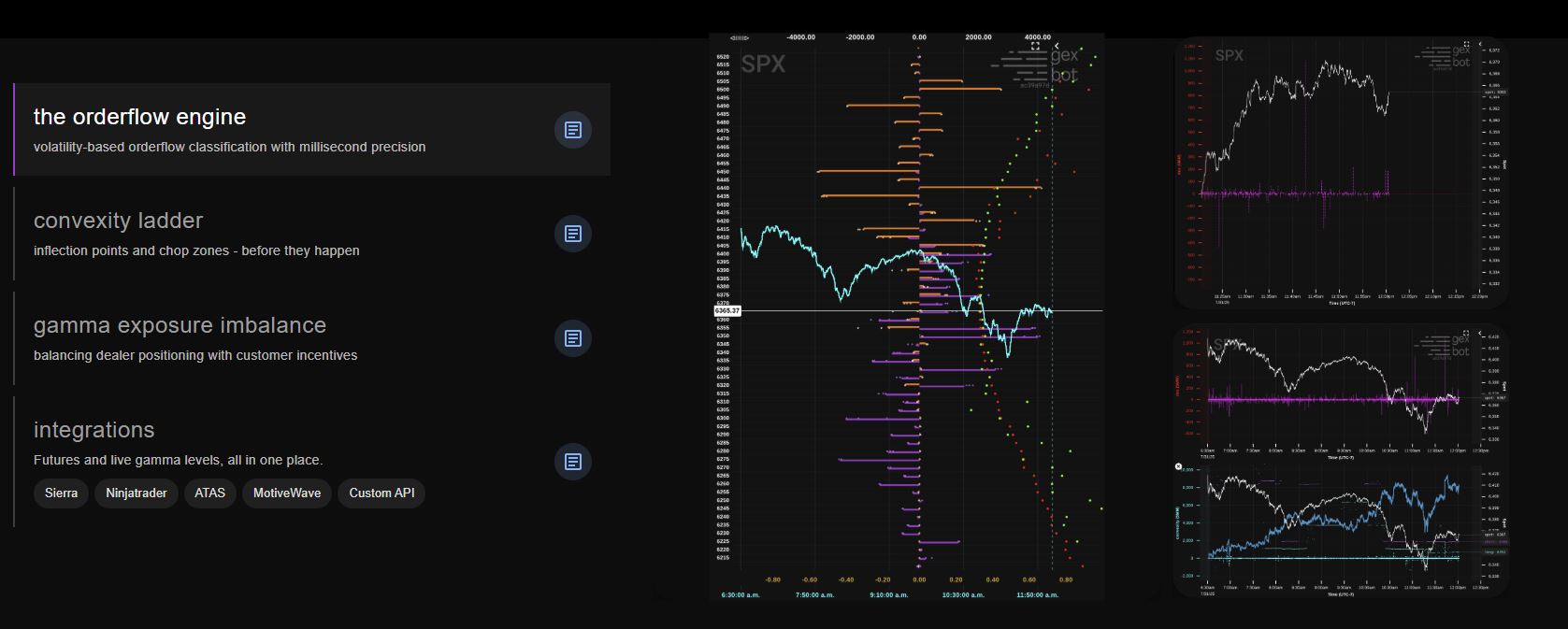
Automation does not eliminate the need for performance monitoring. In fact, it increases the importance of oversight.
Key monitoring metrics include:
- Win/loss ratio
- Average trade duration
- Maximum drawdown
- Equity curve smoothness
- Exposure concentration
Monitoring should occur:
- Daily (for rule compliance)
- Weekly (for performance drift)
- Monthly (for structural review)
Professional traders treat algorithmic systems as tools—not replacements for accountability.
Practical Considerations Before Using Gexbot
Before integrating a Gexbot automation platform, traders should consider:
- Is automation permitted by the prop firm?
- Does the system include equity-based shutdown rules?
- Are execution logs transparent?
- Can risk be capped below firm drawdown limits?
- Is there a manual override option?
Failure to answer these questions can create operational conflict between automation and structured evaluation requirements.
Psychological Impact of Automation
Automation alters trader psychology.
Potential benefits:
- Reduced emotional decision-making
- Consistent rule execution
- Structured risk application
Potential risks:
- Overconfidence in system reliability
- Reduced situational awareness
- Delayed reaction to regime shifts
Professional environments treat automation as a risk-managed component, not a fully autonomous solution.
Institutional Perspective on Algorithmic Trading
In institutional finance, algorithmic trading systems operate within:
- Predefined capital allocation limits
- Independent risk monitoring
- Compliance oversight
- Stress testing frameworks
Retail traders adopting automation should aim to replicate these disciplines at a smaller scale.
Without structured oversight, algorithmic exposure can become uncontrolled leverage.
Explore NowConclusion
Gexbot represents part of a broader shift toward automation in retail and professional trading environments. While automation can introduce consistency and operational efficiency, it does not remove exposure to market volatility, execution risk, or structural drawdown constraints.
For traders operating within proprietary firm evaluation models, the most important consideration is alignment. Automation must function within defined risk limits, account conditions, and payout structures. A system that violates daily drawdown rules—even once—can invalidate evaluation progress regardless of long-term performance potential.
Understanding how Gexbot works, what risks it introduces, and how it interacts with structured trading environments allows traders to make informed decisions grounded in operational discipline rather than expectation.
Automation is a tool. Its effectiveness depends not on promises, but on structure, oversight, and risk management.