
Contents
- 1. Introduction
- 2. What Is FundingRock?
- 3. Business Model Overview
- 4. Account Types and Evaluation Structure
- 5. Risk Management Rules
- 6. Trading Platforms and Technology
- 7. Instruments and Markets Offered
- 8. Profit Split and Withdrawals
- 9. Education and Community
- 10. Legal Structure and Transparency
- 11. Credibility and Reputation
- 12. Strengths of FundingRock
- 13. Weaknesses and Risks
- 14. Who Is FundingRock Suitable For?
- 15. Final Verdict
- 16. Conclusion
1. Introduction
The proprietary trading (prop trading) industry has grown rapidly over the past few years, driven by increased retail trading participation, advances in online trading platforms, and the appeal of trading with large amounts of capital without risking personal funds. Among the many prop trading firms that have emerged, FundingRock positions itself as a modern, trader-centric firm offering evaluation-based funding, competitive profit splits, and a technology-driven approach to risk management.
This review provides a comprehensive and critical analysis of FundingRock, covering its business model, account structure, rules, trading platforms, legal positioning, strengths, weaknesses, and overall credibility. The goal is not to promote or condemn the project, but to help traders make an informed, rational decision before committing time and money.
2. What Is FundingRock?
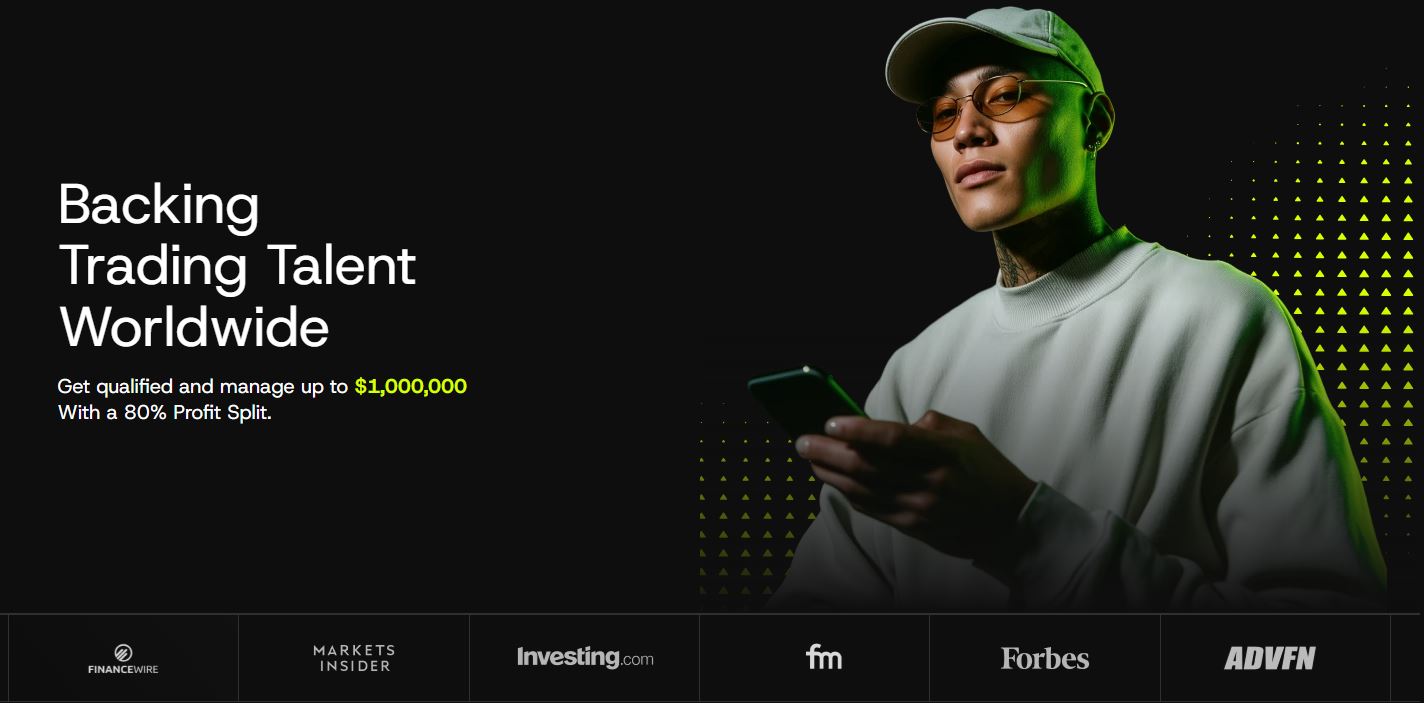
FundingRock is a proprietary trading firm that offers traders access to funded trading accounts after they successfully complete a predefined evaluation or “challenge.” Like most prop firms in the retail trading space, FundingRock does not directly provide investment services or financial advice. Instead, it evaluates traders’ ability to generate profits while respecting strict risk management rules.
In exchange for passing the evaluation, traders can gain access to accounts with virtual capital that simulates real trading conditions. Profits generated under the funded account are shared between the trader and the firm, with FundingRock advertising profit splits of up to 90% in favor of the trader.
3. Business Model Overview
FundingRock’s business model follows the standard evaluation-fee-based prop firm structure, which includes:
-
Evaluation Fees
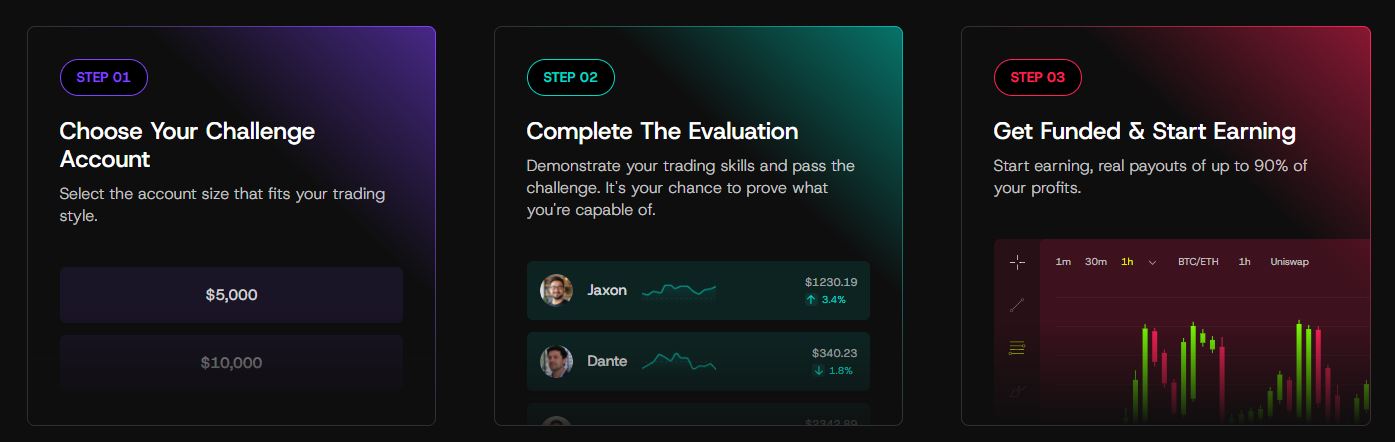
Traders pay a one-time fee to participate in a challenge. This fee varies depending on the account size selected (e.g., $5,000 to $200,000). -
Performance-Based Filtering
Only traders who meet profit targets while respecting drawdown and risk rules progress to the funded stage. -
Profit Sharing
Funded traders receive a percentage of their profits, while FundingRock retains the remainder. -
Risk Control and Scaling
Traders who perform consistently may be eligible for account scaling or increased capital allocation.
This model allows FundingRock to generate revenue even when traders fail challenges, while limiting the firm’s downside risk through strict rules and monitoring.
4. Account Types and Evaluation Structure
4.1 Account Sizes
FundingRock offers multiple account sizes, typically ranging from:
-
$5,000
-
$10,000
-
$25,000
-
$50,000
-
$100,000
-
$200,000
Larger accounts require higher evaluation fees but provide greater earning potential once funded.
4.2 Evaluation Phases
FundingRock generally uses a single-phase or simplified evaluation model, which differentiates it from firms that require two or three evaluation stages. This structure is attractive to traders who prefer a faster path to funding.
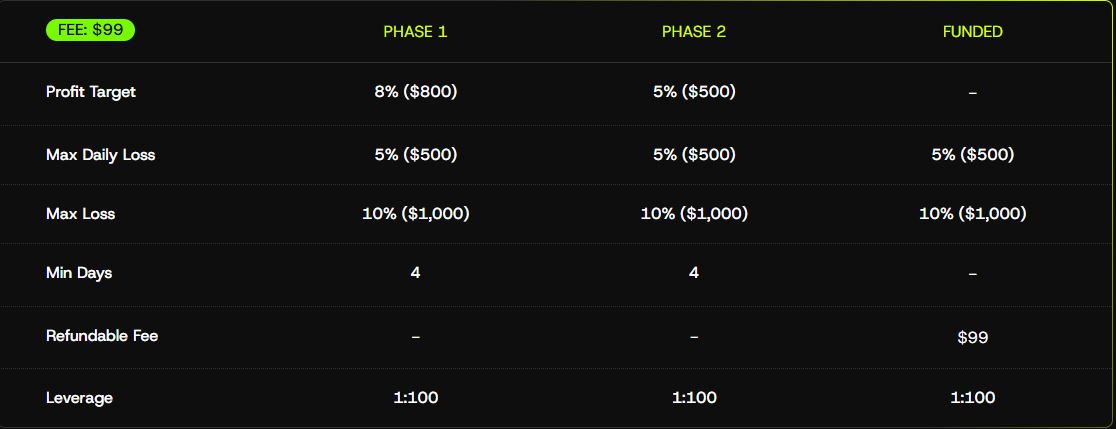
Key evaluation parameters usually include:
-
Profit target (e.g., 8–10%)
-
Maximum daily drawdown
-
Maximum overall drawdown
-
Consistency rules (depending on account type)
Traders must meet all requirements simultaneously; violating any rule results in failure of the challenge.
5. Risk Management Rules
Risk management is central to FundingRock’s offering. While exact parameters may change over time, common rules include:
5.1 Maximum Daily Loss
This rule limits how much a trader can lose in a single trading day. If the daily loss threshold is breached, the account is typically terminated.
5.2 Maximum Overall Drawdown
The maximum drawdown rule ensures that the account equity never falls below a fixed percentage of the initial balance. This rule protects the firm from catastrophic losses.
5.3 Trading Behavior Restrictions
FundingRock may restrict or monitor:
-
News trading during high-impact economic releases
-
Excessive lot sizing
-
Gambling-style behavior (overleveraging, revenge trading)
Such rules are standard in the industry but can feel restrictive to aggressive or short-term traders.

6. Trading Platforms and Technology
6.1 TradeLocker Platform
FundingRock uses TradeLocker, a modern web-based trading platform designed as an alternative to MetaTrader 4 and MetaTrader 5.
Key features include:
-
Web and mobile accessibility
-
Advanced charting tools
-
Fast order execution
-
Support for Expert Advisors (EAs), depending on account rules
TradeLocker’s user interface is generally cleaner and more intuitive than older platforms, which may appeal to newer traders.
6.2 Data and Risk Engine
FundingRock emphasizes its data-driven risk evaluation system, which monitors trader behavior beyond simple profit and loss metrics. This may include:
-
Trade duration analysis
-
Risk-to-reward consistency
-
Position sizing behavior
While this can enhance transparency, it also introduces uncertainty if evaluation criteria are not fully disclosed.
7. Instruments and Markets Offered
FundingRock typically allows trading across:
-
Forex pairs
-
Indices
-
Commodities
-
Cryptocurrencies (depending on account type)
The availability of instruments may vary by region and account configuration. Spreads and commissions are generally designed to resemble real market conditions, though they may not always match top-tier ECN brokers.
8. Profit Split and Withdrawals
8.1 Profit Sharing
FundingRock advertises profit splits of up to 90% for traders, which is competitive within the prop firm industry. Initial profit splits may start lower and increase based on performance or account scaling.
8.2 Withdrawal Policy
Key withdrawal aspects include:
-
First payout eligibility after a defined trading period
-
Express withdrawal options
-
Fee refunds upon the first successful payout (on certain plans)
The speed and reliability of withdrawals are among the most critical factors in evaluating a prop firm. While FundingRock promotes fast payouts, traders should always verify real user experiences before committing.
9. Education and Community
9.1 FundingRock Academy
FundingRock offers educational content through its academy, including:
-
Trading guides
-
Risk management lessons
-
Live sessions or webinars
This educational layer adds value, especially for newer traders, though it is not a substitute for independent learning or experience.
9.2 Community Engagement
The firm maintains a presence on social media and community platforms. However, like many newer prop firms, the authenticity of community feedback should be evaluated carefully due to the prevalence of promotional content in this industry.
10. Legal Structure and Transparency
FundingRock operates under Mindwave Training Limited, registered in Cyprus. This structure is common among prop firms, as they typically position themselves as educational or simulation-based companies rather than regulated financial institutions.
Important considerations:
-
FundingRock does not offer regulated investment services
-
Trader accounts are often simulated, even at the funded stage
-
Legal protections differ significantly from regulated brokers
This does not automatically indicate wrongdoing, but it does mean traders bear higher counterparty risk.
11. Credibility and Reputation
11.1 Online Reviews
Online reviews of FundingRock are mixed. Some users praise:
-
Simple evaluation structure
-
User-friendly platform
-
Competitive profit splits
Others raise concerns about:
-
Aggressive marketing
-
Limited long-term track record
-
Difficulty verifying payout consistency
As with any prop firm, it is important to distinguish between genuine user experiences and incentivized or automated reviews.
11.2 Industry Context
FundingRock operates in a highly competitive and controversial industry. Many prop firms have launched aggressively, only to shut down or change terms later. Longevity and consistent payouts are more important than marketing claims.
12. Strengths of FundingRock
-
Competitive profit split (up to 90%)
-
Modern trading platform (TradeLocker)
-
Simplified evaluation process
-
Educational resources for traders
-
Clear emphasis on risk management
13. Weaknesses and Risks
-
Limited long-term operational history
-
Lack of financial regulation
-
Evaluation rules may be strict for certain strategies
-
Potential reliance on marketing-driven growth
-
Counterparty risk common to all prop firms
14. Who Is FundingRock Suitable For?
FundingRock may be suitable for:
-
Disciplined traders with strong risk management
-
Traders seeking fast access to funded accounts
-
Those comfortable trading under strict rules
-
Traders who understand the risks of unregulated prop firms
It may be less suitable for:
-
High-frequency scalpers
-
Traders relying heavily on news volatility
-
Those unwilling to risk evaluation fees
-
Investors seeking regulated investment products
15. Final Verdict
FundingRock represents a modern, competitive entrant in the retail prop trading industry. Its simplified evaluation model, attractive profit splits, and modern platform make it appealing on the surface. However, like all prop firms, it carries inherent structural risks, including lack of regulation, dependence on evaluation fees, and uncertainty around long-term sustainability.
For experienced traders who fully understand these risks and treat prop trading as a performance-based opportunity rather than guaranteed income, FundingRock may be worth exploring with small initial exposure. For beginners, caution and extensive due diligence are strongly recommended.
16. Conclusion
FundingRock is neither an obvious scam nor a guaranteed opportunity. It is a business built around trader evaluation, operating in an industry where marketing often outpaces substance. Success with FundingRock depends far more on the trader’s discipline, consistency, and risk awareness than on the firm itself.
As with any prop trading firm, the safest approach is to:
-
Start small
-
Read all rules carefully
-
Verify payout proof from multiple independent sources
-
Never trade money you cannot afford to lose