
Contents
- Introduction
- hat Is Hash Hedge?
- How the Hash Hedge Model Works
- Trading Environment and Instruments
- Pricing and Fees
- Profit Splits and Payouts
- Legal Status and Transparency
- User Reviews and Community Feedback
- Strengths of Hash Hedge
- Weaknesses and Red Flags
- Comparison with Other Crypto Prop Firms
- Who Should Consider Hash Hedge?
- Risk Management Tips for Potential Users
- Final Verdict
Introduction
In recent years, the rise of proprietary trading firms (commonly known as prop firms) has reshaped how traders access capital. Instead of risking their own funds, traders can now prove their skills through evaluation programs and gain access to large accounts funded by a company. While this model has long existed in traditional financial markets, the concept has recently expanded into the cryptocurrency space.
One of the firms positioning itself in this niche is Hash Hedge, a crypto-focused prop trading firm that offers traders the opportunity to manage accounts of up to $100,000 or more. With promises of high profit splits, fast payouts, and a modern trading environment, Hash Hedge has attracted attention from retail crypto traders worldwide.
However, the crypto prop trading industry remains relatively new, largely unregulated, and often controversial. Some firms have built strong reputations, while others have faced accusations of poor transparency, unfair trading conditions, or even outright fraud.
This article provides a thorough, unbiased review of Hash Hedge—examining its business model, trading conditions, evaluation process, pricing, strengths, weaknesses, and potential risks. Whether you are a trader considering their program or simply researching crypto prop firms, this review aims to help you make a more informed decision.
hat Is Hash Hedge?
Hash Hedge presents itself as a cryptocurrency proprietary trading firm. Unlike traditional brokers where traders deposit their own funds, a prop firm allows traders to trade the firm’s capital after they pass a qualification process. Profits are then shared between the trader and the firm.
According to its website and marketing materials, Hash Hedge offers:
-
Funded trading accounts up to $100,000 or higher
-
A two-step evaluation process (Challenge and Verification)
-
Profit splits of up to 80% for traders
-
A wide selection of crypto assets (160+ instruments)
-
Leverage up to 1:5
-
Payouts within 72 hours, with a compensation policy if delayed
Hash Hedge focuses exclusively on the crypto market, differentiating itself from many prop firms that primarily serve forex or equity traders.
The firm also promotes an affiliate and referral program, allowing users to earn commissions by introducing new traders.

How the Hash Hedge Model Works
To understand whether Hash Hedge is attractive or risky, it is essential to examine its business structure and trading process.
1. The Evaluation System
Hash Hedge follows a model that is standard across many prop firms:
Phase 1: The Challenge
Traders must achieve a predefined profit target—often around 8%—within a set period while respecting strict risk rules. These usually include:
-
Maximum daily drawdown
-
Overall drawdown limit
-
Position sizing and leverage restrictions
Failing any rule results in disqualification, meaning the trader must restart by purchasing a new challenge.
Phase 2: Verification
If the trader passes the Challenge, they move to a second phase called Verification. The profit target is typically lower (around 6%), but risk rules remain in place. This phase is meant to confirm that the trader’s performance was not simply due to luck.
Phase 3: Funded Account
Upon passing both phases, the trader receives a funded account and can trade what is presented as the firm’s capital. Profits generated are shared, often at a ratio of 80% to the trader and 20% to the firm.
This structure mirrors the evaluation processes used by many well-known prop firms in forex and CFD markets.

Trading Environment and Instruments
Asset Coverage
Hash Hedge markets access to over 160 crypto instruments, including:
-
Major cryptocurrencies such as Bitcoin (BTC) and Ethereum (ETH)
-
Popular altcoins (BNB, SOL, XRP, ADA, etc.)
-
A range of smaller or more speculative tokens
This broad asset coverage is appealing to crypto traders who prefer diversification or strategy-specific markets.
Leverage and Risk Controls
The firm advertises leverage of up to 1:5, which is relatively conservative compared to many retail crypto exchanges that offer leverage of 50x or even 100x. While lower leverage may reduce the risk of catastrophic losses, it can also limit potential returns for aggressive strategies.
Risk rules—such as daily drawdown and maximum overall loss—are strictly enforced. These rules are a double-edged sword:
-
Pros: They encourage disciplined risk management and protect the firm’s capital.
-
Cons: They can be unforgiving, especially in the highly volatile crypto market, where short-term price swings may trigger a rule violation even if the trader’s long-term strategy is sound.
Platform and Execution
Hash Hedge claims to provide a professional trading environment with fast execution, competitive spreads, and minimal slippage. However, user experiences appear mixed. Some traders report smooth execution, while others claim issues such as:
-
Slippage during volatile periods
-
Price discrepancies compared to major exchanges
-
Occasional technical problems
In crypto trading, where price movements can be sudden and extreme, execution quality is critical. Any inconsistency can significantly impact profitability and rule compliance.
Pricing and Fees
One of the most important aspects of any prop firm is the cost of entry. Hash Hedge requires traders to purchase a challenge in order to participate. The fee depends on the account size selected.
For example (approximate figures based on public information):
-
$10,000 account → Lower entry fee
-
$50,000 account → Moderate fee
-
$100,000 account → Higher fee
These fees are typically non-refundable unless the trader successfully passes the challenge and receives a funded account, at which point some firms offer a refund of the evaluation fee. Hash Hedge’s refund policies should be reviewed carefully in its terms and conditions.
From a business standpoint, evaluation fees represent a major source of revenue for many prop firms. Critics argue that some firms may be incentivized to design rules that cause a high failure rate, maximizing fee income rather than truly seeking profitable traders.
Profit Splits and Payouts
Hash Hedge advertises profit splits of up to 80% in favor of the trader, which is competitive within the prop trading industry.
The firm also claims:
-
Payout processing within 72 hours
-
A compensation policy promising multiple times the payout amount if delays occur
If implemented consistently, such terms would be attractive. However, actual payout reliability is one of the most debated topics in online prop trading communities.
Some traders report receiving payouts as expected, while others claim delays, disputes, or additional verification requirements. This inconsistency is not unique to Hash Hedge but is common across many unregulated or lightly regulated prop firms.
Legal Status and Transparency
One of the most critical aspects of evaluating any financial service provider is regulation and legal transparency.
Company Registration
Hash Hedge does not prominently display regulatory licenses from major financial authorities (such as the FCA, SEC, ASIC, or similar bodies). This is not unusual in the prop trading industry—many firms operate in a legal gray area, as they claim not to be brokers or investment managers but rather “trading education” or “simulation” platforms.
However, the lack of clear regulatory oversight introduces several risks:
-
Limited consumer protection
-
No formal dispute resolution mechanisms
-
Difficulty verifying the firm’s financial backing or corporate structure
Ownership and Corporate Information
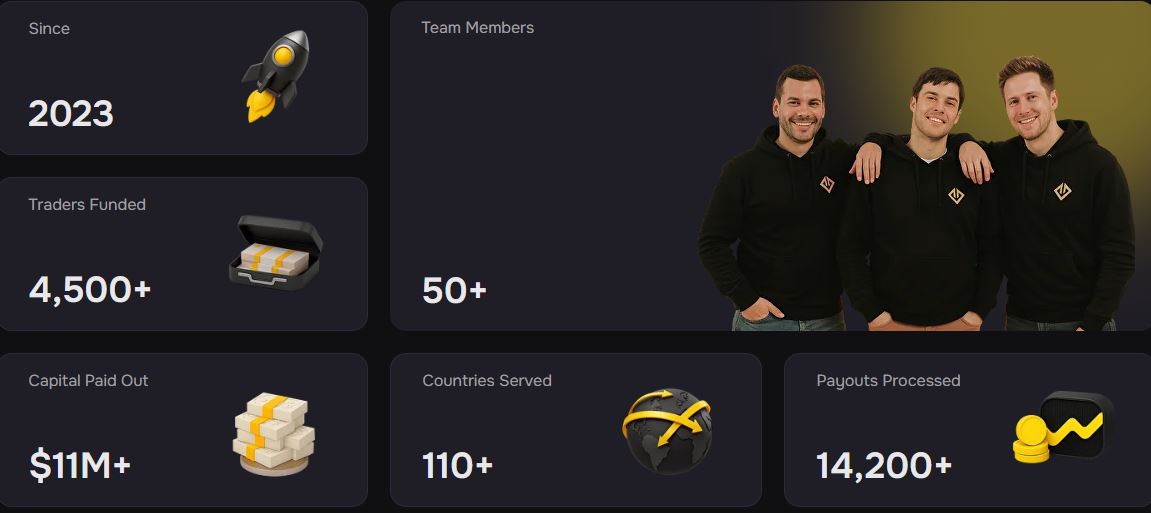
Publicly available information about Hash Hedge’s corporate ownership, management team, and physical headquarters is limited. While some users may not consider this a major issue, experienced traders often view transparency as a key indicator of long-term legitimacy.
In contrast, established financial institutions usually provide clear information about their leadership, legal entities, and regulatory compliance.
User Reviews and Community Feedback
To understand how Hash Hedge performs in real-world conditions, it is useful to examine feedback from traders across different platforms.
Positive Experiences
Some users report:
-
Successfully passing evaluations
-
Receiving funded accounts
-
Getting payouts within the stated timeframe
-
Satisfactory customer support interactions
These experiences suggest that Hash Hedge is not purely a “paper” operation and that at least some traders have been able to operate profitably within the firm’s system.
Negative Feedback and Concerns
At the same time, a notable number of traders raise concerns, including:
-
Withdrawal delays or denials
-
Rule interpretations that appear overly strict or inconsistent
-
Execution issues during high volatility
-
Price feeds that differ from major exchanges
Additionally, some independent review websites classify Hash Hedge as high risk or potentially unsafe, citing limited transparency and user complaints.
It is important to note that online reviews in the prop trading space are often polarized. Traders who succeed are more likely to leave positive feedback, while those who fail or experience problems may feel strongly negative. Nevertheless, repeated patterns of similar complaints should not be ignored.
Strengths of Hash Hedge
Despite the risks, Hash Hedge does offer several appealing features:
1. Crypto-Focused Model
Unlike many prop firms that primarily serve forex traders, Hash Hedge is built specifically for cryptocurrency markets. This focus allows it to offer a broader range of crypto instruments and tailor its rules to the unique volatility of digital assets.
2. High Profit Split
An 80% profit share is competitive and can be highly attractive for consistently profitable traders.
3. Access to Large Capital
For traders with proven strategies but limited personal funds, the opportunity to manage a six-figure account is a major advantage.
4. Structured Risk Management
The firm’s strict drawdown and risk rules encourage disciplined trading and protect against catastrophic losses.
5. Affiliate Opportunities
For traders with strong networks, the affiliate program provides an additional revenue stream beyond trading performance.
Weaknesses and Red Flags
At the same time, several issues warrant caution:
1. Lack of Regulation
Hash Hedge does not appear to be regulated by any major financial authority. This means traders have limited legal protection in the event of disputes.
2. Limited Transparency
Key information about company ownership, financial backing, and operational structure is not clearly disclosed.
3. Conflicting User Reports
While some traders report smooth payouts, others describe delays or denials, raising questions about consistency and fairness.
4. Potential Conflict of Interest
As with many prop firms, a significant portion of revenue likely comes from challenge fees, creating a potential incentive for the firm to design rules that are difficult to pass.
5. Crypto Market Volatility
The extreme volatility of cryptocurrency markets makes it easier for traders to violate drawdown rules, even with sound strategies.
Comparison with Other Crypto Prop Firms
To put Hash Hedge in context, it is useful to compare it with other crypto-focused prop firms:
-
Established firms often offer lower profit splits but provide greater transparency, better-known leadership, and stronger reputations.
-
Newer or smaller firms may advertise higher profit shares and faster payouts but carry higher operational risk.
Hash Hedge appears to fall into the second category: offering attractive terms but lacking the institutional credibility of larger financial entities.
Who Should Consider Hash Hedge?
Hash Hedge may be suitable for:
-
Experienced crypto traders with strong risk management and consistent strategies
-
Traders who understand the prop firm model and are comfortable with its rules and limitations
-
Individuals who can afford to lose the evaluation fee without financial hardship
It may not be suitable for:
-
Beginners without a proven trading system
-
Traders who require strong regulatory protection
-
Anyone uncomfortable with limited transparency or legal uncertainty
Risk Management Tips for Potential Users
If you are considering Hash Hedge or any similar prop firm, consider the following precautions:
-
Start Small
Begin with the smallest account size to test the platform, execution, and payout process. -
Read the Terms Carefully
Pay close attention to drawdown rules, payout conditions, and any clauses that allow the firm to deny or delay payments. -
Document Everything
Keep records of trades, account statements, and communications in case of disputes. -
Avoid Overtrading
Given the strict risk rules, conservative position sizing is essential. -
Diversify Your Income
Do not rely on a single prop firm as your only source of trading income.
Get started
Final Verdict
Hash Hedge represents a growing trend in the crypto trading world: prop firms that offer capital to independent traders in exchange for evaluation fees and profit sharing. On paper, its offering is attractive—large funded accounts, high profit splits, fast payouts, and access to a wide range of crypto assets.
However, the firm also raises important questions. The lack of regulatory oversight, limited corporate transparency, and mixed user feedback introduce risks that cannot be ignored. While some traders report successful experiences, others describe problems with execution and withdrawals.
Ultimately, Hash Hedge is neither an obvious scam nor a risk-free opportunity. It occupies a gray area common to many modern prop firms: potentially rewarding for skilled traders, but structurally risky due to the absence of strong external oversight.
For disciplined, experienced traders who understand the model and can accept the possibility of losing their evaluation fees, Hash Hedge may offer a worthwhile opportunity to scale their trading. For those seeking maximum security, regulatory protection, and long-term stability, more established and transparent alternatives may be the safer choice.
As always in crypto and trading, due diligence is essential. Do not be swayed solely by marketing promises or profit split percentages. Understand the rules, evaluate the risks, and only commit capital you can afford to lose.