In the world of prop-firm trading, the idea of trading with “someone else’s capital” is very appealing — and that’s exactly the promise of Ylos Trading. Promising up to $300,000 in funded capital, low entry costs, and high profit share, Ylos Trading presents itself as a gateway for traders who don’t want to risk large amounts of their own money. But is Ylos Trading a legitimate prop firm — or a risky venture disguised as an opportunity? Let’s explore what is known, what is uncertain, and what you should seriously consider before getting involved.
Get Startred
Contents
✅ Ylos Trading’s Pitch: What It Offers
On its website, Ylos Trading markets itself as a “premier proprietary trading firm,” offering the following advantages to potential traders:
-
Access to large funded capital: Traders may access up to $300,000 as “simulated capital” to trade U.S. markets without using their own capital.
-
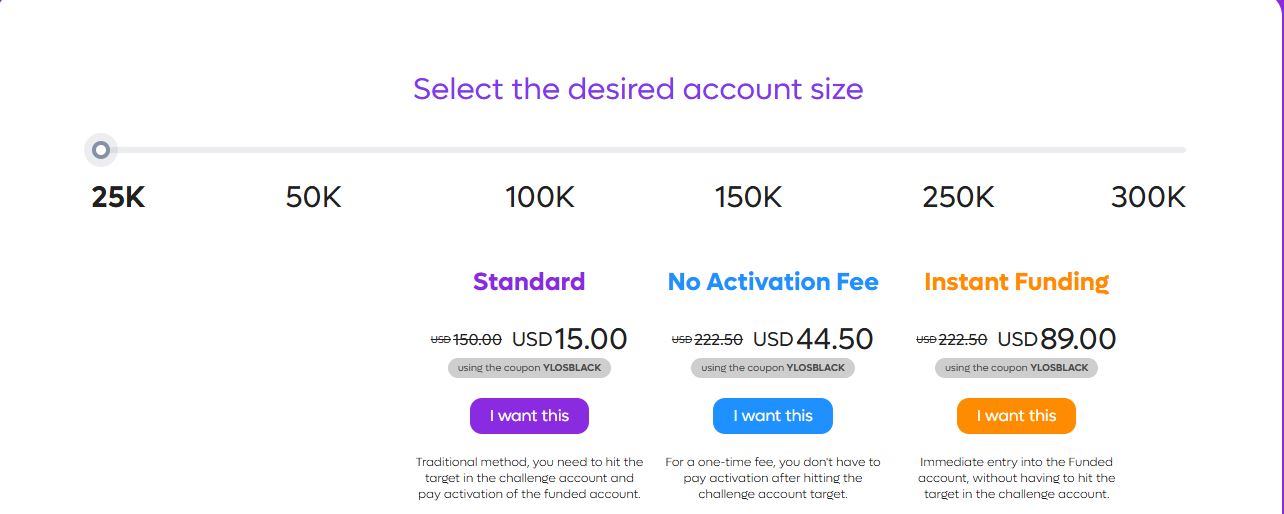
Low initial cost: They advertise entry “plans” beginning at relatively small amounts (e.g., a “trial” or “challenge” rather than a heavy upfront deposit).
-
Attractive profit sharing: Once “funded,” traders supposedly keep 100% of profits up to a certain threshold (e.g., $15,000), and 90% of profits beyond that.
-
Transparent rules and fast payouts: According to their website, rules are laid out clearly; once payout is approved, the claim is that withdrawals are processed quickly, allegedly “within 24 hours.”
-
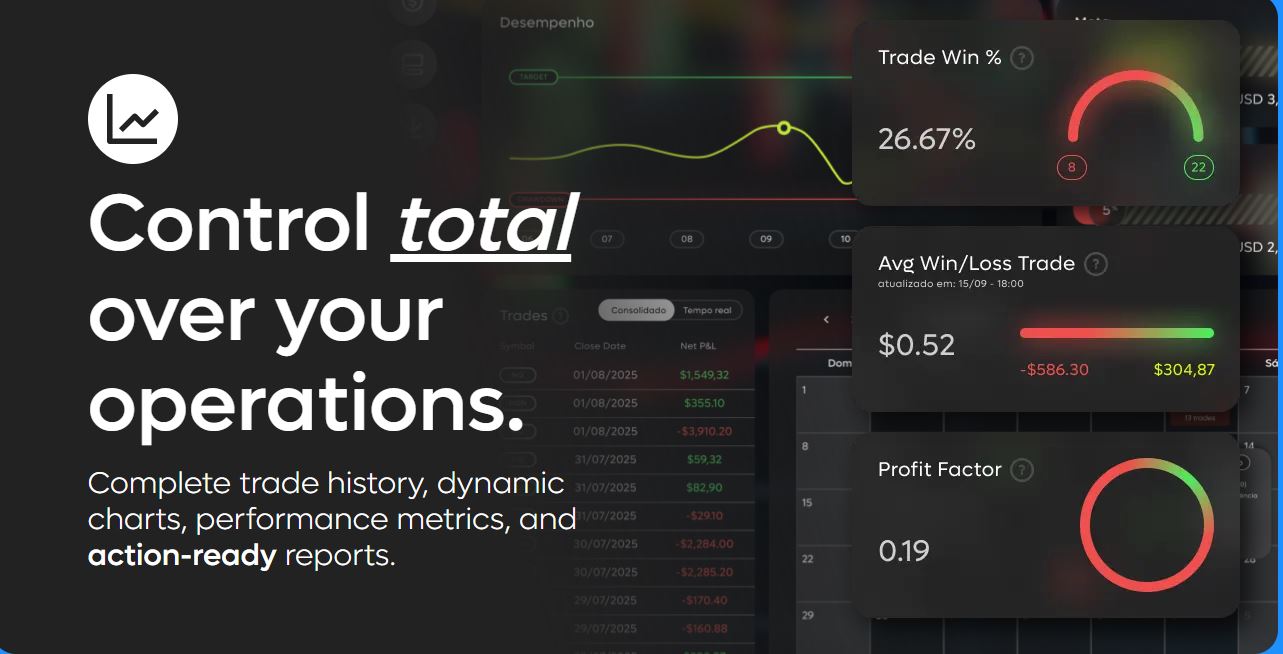
Professional infrastructure: They claim to use a platform (BlackArrow, by Nelogica), global support, and multilingual interface — giving the appearance of a “real” proprietary firm rather than a small-time operation.
These offerings can sound very attractive — especially for retail traders with limited capital who want to test or scale trading in US futures/markets.
⚠️ Warning Signs & What Independent Reviews Say
However — a closer look at external reviews, domain data, and user feedback reveals a number of warning signs and red flags that suggest Ylos Trading might carry a high level of risk.
🔎 Domain & Hosting Background
-
According to a review on the independent site ScamAdviser, the domain ylostrading.com was registered only on 2024-06-24, meaning the site is still very young (around 1.5 years old as of late 2025). scamadviser.com+1
-
While ScamAdviser gives a “fair” trust rating (~80%), it also flags a major concern: the site might be classified as HYIP (“high-yield investment program”) — a tag often associated with high-risk or Ponzi-style operations. scamadviser.com
-
The hosting uses a shared server, which means the website shares infrastructure with other unknown entities. For financial services, that adds a technical security concern rather than a guarantee of safety. scamadviser.com+1
In short: while there is a valid SSL certificate and domain registration, those are not guarantees of legitimacy — scammers often replicate these features to appear credible.
⚠️ Structural Warnings
Beyond user reviews and domain data, there are structural issues:
-
The short lifespan of the domain: a prop firm with serious, sustainable funding typically would have longer history.
-
Classification under HYIP by some independent validators — raising the possibility that Ylos Trading might rely on new users’ fees or deposits rather than genuine trading profits
-
Lack of transparent evidence of “real, verifiable payouts”: many positive reviews are anecdotal, with no independent audit or proof of large-scale withdrawals.
-
The very nature of “simulated capital + proprietary firm” model: it’s inherently high-risk, and many “prop firms” in the industry have been criticized for shifting rules or acting arbitrarily when traders become profitable — a practice documented in complaints and forums.
🎯 What Could Happen if You Join — Scenarios & Risks
If you consider joining Ylos Trading, here are possible outcomes — from best-case to worst-case, and what that might mean for you.
✅ Best-case scenario (for some traders)
-
You pass the challenge or trial, get a “funded account,” trade carefully, keep risk low, and abide by rules.
-
You make consistent profits and successfully withdraw repeatedly (some users claim this happened).
-
Because capital is provided by the firm, you avoid risking large personal funds — potentially high reward with limited downside (thanks to the challenge’s small fee).
This is likely what the 5-star reviews represent. For disciplined, experienced traders who understand risk and rules, there might be legitimate opportunity.
⚠️ Risk scenario — what many complain about
-
You trade “by the book,” reach profit targets — but at withdrawal time, risk compliance or “hidden rule violations” are cited; funds are withheld.
-
The compliance/ risk-scoring process may appear arbitrary or opaque; even with records/screenshots you may struggle to get clarity or resolution.
-
Over time, the firm could change rules (drawdown limits, minimum holding periods, disallowed strategies) — making consistent profitability extremely difficult.
-
Because the firm is relatively new, long-term sustainability is uncertain; potential existence of a “honeypot” structure: early profits paid out to build trust, later profits withheld or execution changed — especially risky if many traders try to withdraw simultaneously.
Given the RED flags — especially withdrawal denials — many traders may effectively lose their time, hopes, and the initial fee without ever seeing “real profits.”
🧑💡 My View — Treat Ylos Trading as a High-Risk Experiment, Not a Safe Bet
Based on the available evidence, here’s how I view Ylos Trading:
-
Ylos Trading might partly function as advertised — some traders apparently received payouts and had smooth experiences.
-
HOWEVER — the combination of a short domain history, HYIP-style classification, and non-trivial number of user complaints over withdrawals suggests strongly that it carries significant risk of loss, especially for anyone counting on consistent profits.
-
For many — especially beginners or traders without strong risk management and documentation — the odds may be stacked: “do everything right, and yet still get blocked.”
Therefore, if you consider joining: only invest what you can afford to lose (e.g., treat the entry fee as “tuition” rather than an investment); document everything carefully (logs, screenshots, strategy, timestamps); don’t expect steady income; and treat Ylos as a high-risk, speculative experiment — not a stable prop-firm job or income source.
🔎 How to Approach – If You Insist on Trying
If after all the above you still want to try Ylos Trading, here’s how to reduce risk and protect yourself:
-
Start with the smallest plan / trial fee possible — don’t overextend with big plans.
-
Keep thorough records — every trade, entry/exit time, screenshots, compliance with rules. If there’s a dispute about “risk” or “holding time,” you need evidence.
-
Withdraw conservatively and early — when you hit payout thresholds, request withdrawal rather than chasing more profit. Avoid letting big balances accumulate.
-
Avoid aggressive strategies (HFT, news trading, high leverage) that might trigger “risk flags.”
-
Don’t assume the rules are fixed — stay updated; prop-firms may change terms.
📝 Conclusion — Opportunity with a Big Asterisk
Ylos Trading presents an enticing offer: low-cost access to funded trading capital, high profit share, and a “gateway” for traders who lack large personal capital. For a subset of traders — those skilled, disciplined, risk-aware — there may be legitimate chances of short-term profit.
But the substantial evidence of risk — domain youth, HYIP classification, shared hosting, and multiple withdrawal complaints — means this is far from a “safe” or “reliable” prop firm. If anything, it resembles a high-risk gamble, not a stable financial opportunity.
If you decide to proceed with Ylos, do so with caution, modest expectations, and full awareness that the drawdowns might not only be market-related, but structural — determined by how the firm chooses to enforce rules.
Bottom line: Ylos Trading is a possible but risky opportunity — treat it like you would a speculative bet, not a guaranteed path to profit or passive income.